Why goals cost more later — inflation and today's money
Inflation means the same goal costs more in future rupees, so goal targets are often stated in today's money first.
Prices usually rise over time. That general rise is called inflation, and it is the reason a goal that costs a certain amount today will usually cost more when the day arrives.
Today's money and future money
When planning a goal, there are two ways to state its cost. The first is in today's money: what the goal would cost if it had to be paid for now. The second is in future money: what it is expected to cost on the date it falls due, after allowing for rising prices. The two numbers describe the same goal, but they are far apart when the goal is many years away.
An illustration with no particular rate
Imagine a course that costs a round sum today. If prices rise steadily each year, then each year the course costs a little more than the year before. After a long stretch, the cost is clearly higher, and the gap grows faster the longer the wait. The growth compounds, in the same way that savings compound, only working against the saver.
Why the choice of rate matters
Different costs rise at different speeds. Everyday goods, education, healthcare and property each follow their own path, and no one can know in advance what the rate will be. Planning therefore uses an assumed rate. A small change in that assumption can move a long-dated target by a large amount, so it helps to see more than one case.
Converting both ways
Inflation can be applied forwards, to find the future cost of something priced today. It can also be applied backwards, to find what a future sum is worth in today's money. Doing both for the same goal shows whether a target is stated in comparable terms.
How Mandala shows this
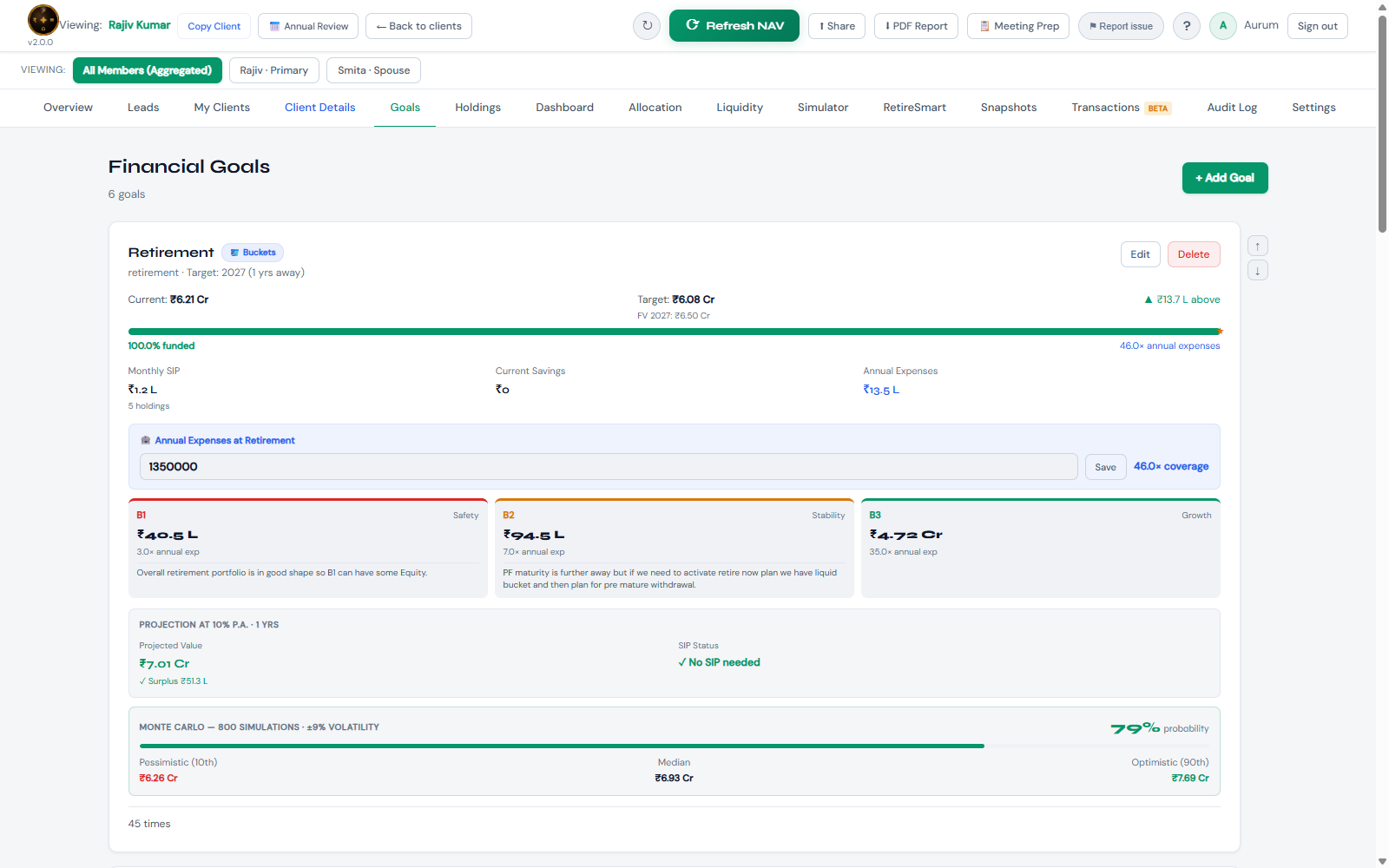
When a goal is entered, Mandala holds a target amount and a target year, and projects the cost forward using an inflation assumption. The goal card then compares that future cost with what the linked holdings are projected to reach, and shows any gap. A free inflation calculator on this site lets anyone try the same arithmetic on their own numbers.
All of these are illustrations that rest on assumed rates. They are not forecasts.
Watch
From the Mandala channel on YouTube. The video shows the Mandala feature itself; the explainer above is the educational part. Watch on YouTube
See it live in Mandala
Related reads
Educational content only, not investment advice. Examples are illustrative, and nothing here is a recommendation to buy, sell or hold any product. Investments are subject to market risks.