What is asset allocation?
Asset allocation is how your money is divided across kinds of assets such as equity, debt, gold and cash.
Asset allocation describes how a portfolio is split between different kinds of assets. The common groups are equity (shares and equity funds), debt (bonds, deposits and debt funds), gold, and cash. Real estate and other holdings can be added as further groups.
Why the split matters
Different asset groups behave differently over time. Equity tends to move up and down by larger amounts, debt tends to move more gently, gold often follows its own pattern, and cash stays steady but grows slowly. The mix of these groups shapes how a whole portfolio behaves, which is why many people look at the split before looking at any single fund.
Looking through to what a fund holds
A fund's name does not reliably tell you what it holds. A hybrid or balanced fund, for example, may hold both equity and debt. To see a true split, each holding has to be broken down into the equity, debt, gold and cash inside it, then added up across the portfolio. Without this step, a portfolio with several hybrid funds can look very different from what it really contains.
A snapshot, not a verdict
An allocation is a picture of one moment. It changes as prices move and as money is added or withdrawn, so the split from last year may not match today. Comparing the current split with an earlier one, or with a written target, shows how far things have moved.
How Mandala shows this
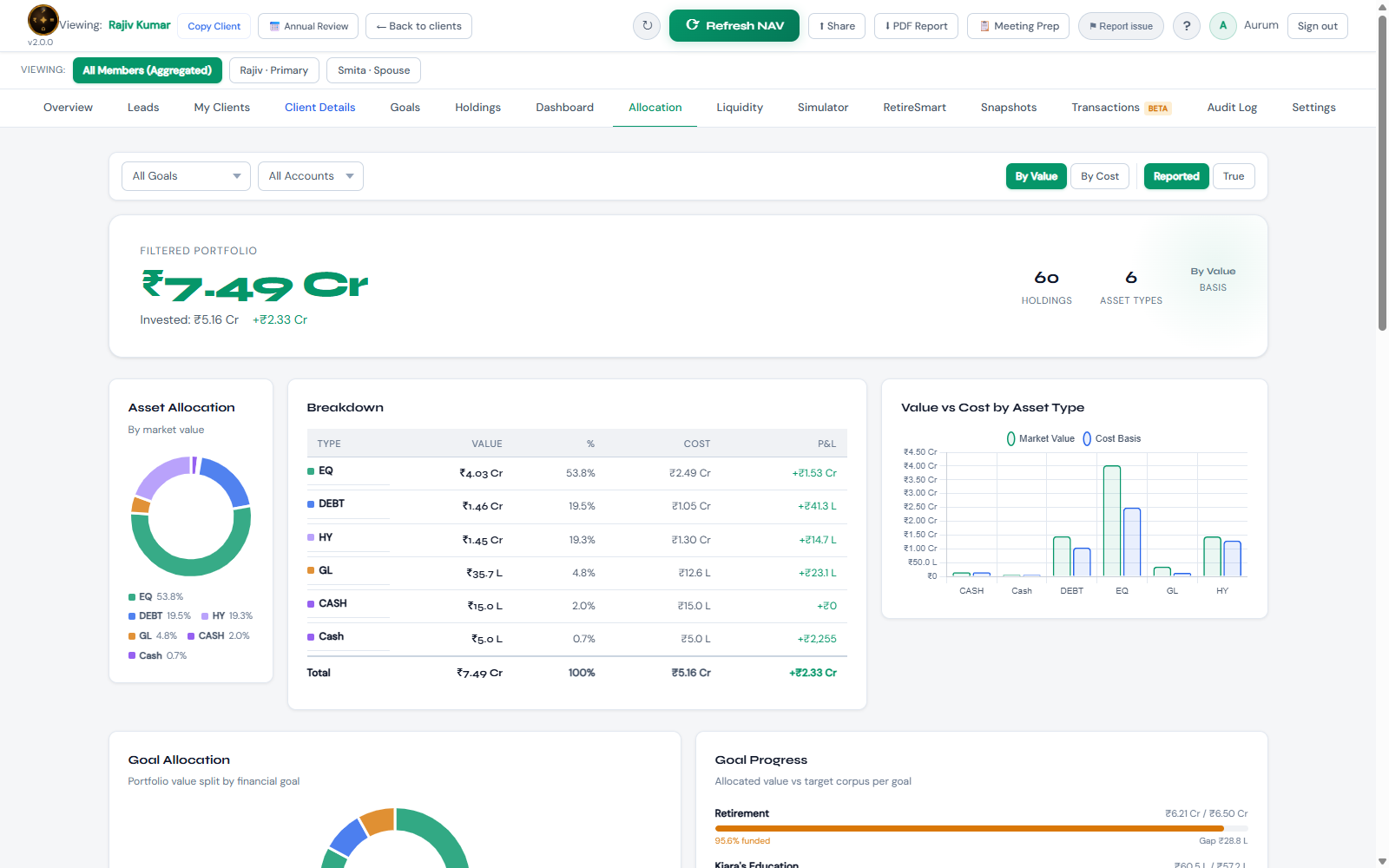
The Allocation tab splits a household portfolio into equity, debt, gold, cash, real estate and other groups, looking through hybrid holdings to their underlying mix. It shows the split by value and by cost, so you can see both what the portfolio is worth today and what was put in. Saved snapshots let you compare the split across dates, and an Investment Policy Statement, if one exists, supplies the target to compare against.
A simple way to read it
- Check which group makes up the largest share of the total.
- Compare the current split with any written target.
- Look at how the split has changed between two dates.
None of this says what a split ought to be. That depends on a person's goals, timeline and comfort with ups and downs, and it is a conversation for each household or its adviser.
Watch
From the Mandala channel on YouTube. The video shows the Mandala feature itself; the explainer above is the educational part. Watch on YouTube
See it live in Mandala
Related reads
Educational content only, not investment advice. Examples are illustrative, and nothing here is a recommendation to buy, sell or hold any product. Investments are subject to market risks.